

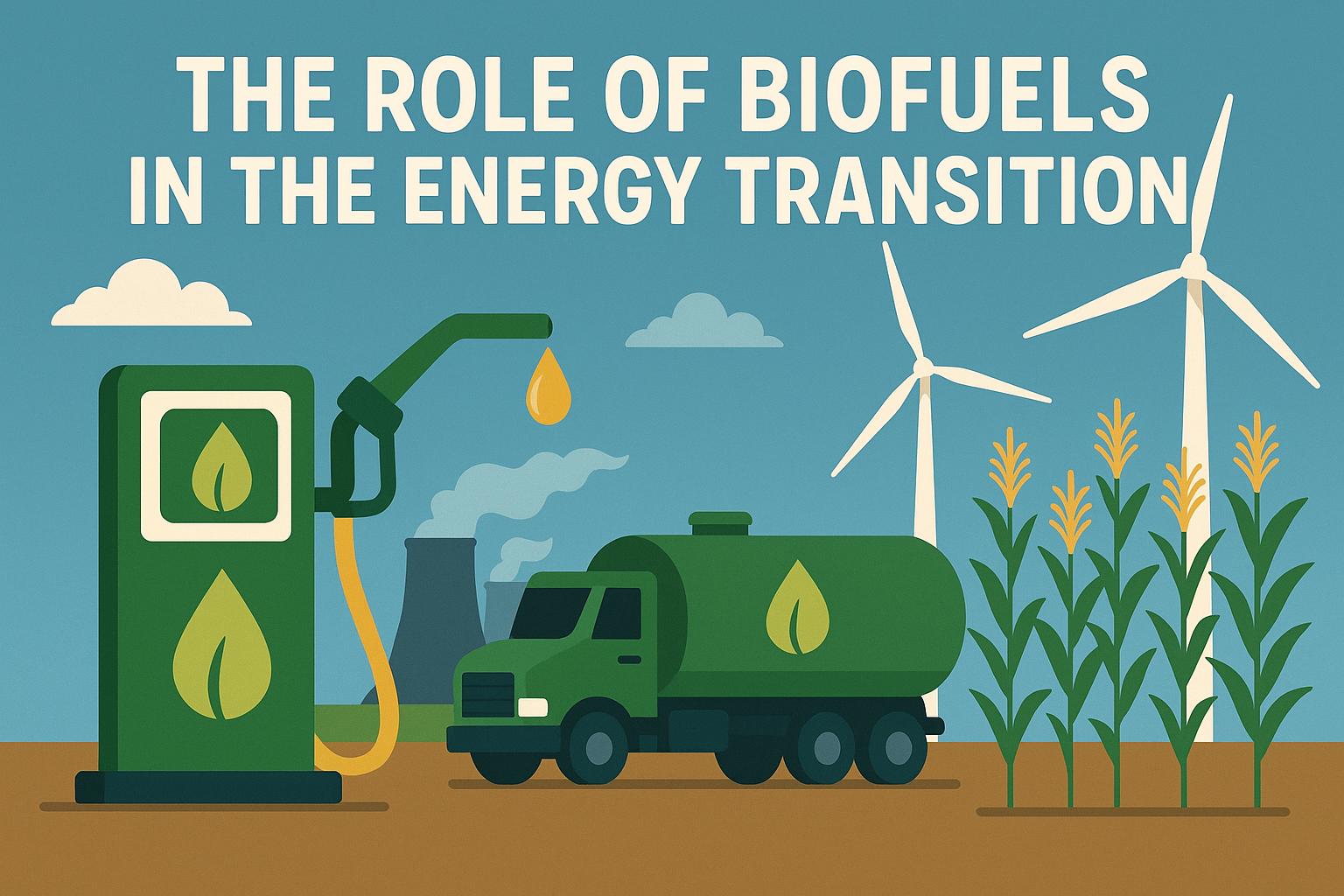
The Importance of Biofuels in the Energy Transition
Biofuels have emerged as a significant element in the global endeavor to transition to sustainable energy. As nations strive to cut down reliance on fossil fuels and curb carbon emissions, biofuels offer a practical alternative. These fuels are produced from biological materials, including plant residues or animal waste, and find applications across diverse sectors such as transportation, power generation, and heating systems.
Types of Biofuels
Biofuels are generally classified into several categories, mainly based on their source and production methodology.
First-generation biofuels are derived from food crops such as corn and sugarcane. However, these biofuels have been criticized for their competition with food production, which raises ethical and practical concerns about food security and land use.
Second-generation biofuels circumvent this issue by utilizing non-food biomass. These include agricultural residues, wood chips, or grasses, which do not interfere with food supplies. They represent a more sustainable approach to biofuel production by leveraging waste materials.
Third-generation biofuels focus on the use of algae, which boasts a high yield potential. Despite the promising prospects, adoption on a large scale is hindered by technological and economic barriers that require further research and investment to overcome.
Environmental Benefits
The environmental advantages of biofuels can be substantial. Since biofuels are sourced from ongoing biological processes, they are viewed as a way to recycle carbon in the atmosphere rather than introducing new carbon from ancient reserves, such as those found in fossil fuels. This cycle can effectively reduce net carbon emissions, thereby aiding climate change mitigation efforts. Additionally, biofuels hold the potential to reduce dependency on imported fossil fuels, thereby bolstering energy security and enhancing energy independence on a national scale.
Economic Considerations
The production and utilization of biofuels can invigorate rural economies by generating employment opportunities in both agricultural and processing industries. Furthermore, innovations in biofuel technology can spur advancements in other fields, including biotechnology and renewable energy sectors.
However, the ongoing challenge lies in the cost of production. Presently, biofuels are often more expensive than traditional fossil fuels, although progress in technology and the benefits of economies of scale are gradually helping to narrow this price gap. As technology evolves, biofuel production is expected to become more cost-effective, making it a financially viable option for wider adoption.
Challenges and Future Potential
Despite the numerous benefits, the adoption of biofuels is not without obstacles. One of the primary concerns revolves around the sustainability of feedstock production and the social implications related to land use. These issues necessitate careful management to ensure that biofuel production does not inadvertently lead to deforestation, habitat loss, or negative impacts on local communities.
Moreover, there is a persistent need for advanced technological development to enhance yield and cost-efficiency. Continued research and development can pave the way for breakthroughs that make biofuels a more practical and economically feasible energy source.
The future of biofuels is closely linked to ongoing progress in research and development, as well as the establishment of supportive policy frameworks that encourage innovation and investment. With sustained investment and commitment, biofuels are well-positioned to play a crucial role in achieving sustainable energy target. This, in turn, will contribute to a more diversified and resilient energy mix, reducing overall reliance on fossil fuels and promoting environmental sustainability.
In summary, biofuels represent a promising component of the global energy transition towards cleaner and more sustainable energy solutions. Despite facing several challenges, their potential benefits to the environment, economy, and energy security make them an indispensable part of future energy strategies. As technology advances and policy support strengthens, biofuels are likely to gain traction, paving the way for a more sustainable energy landscape.