

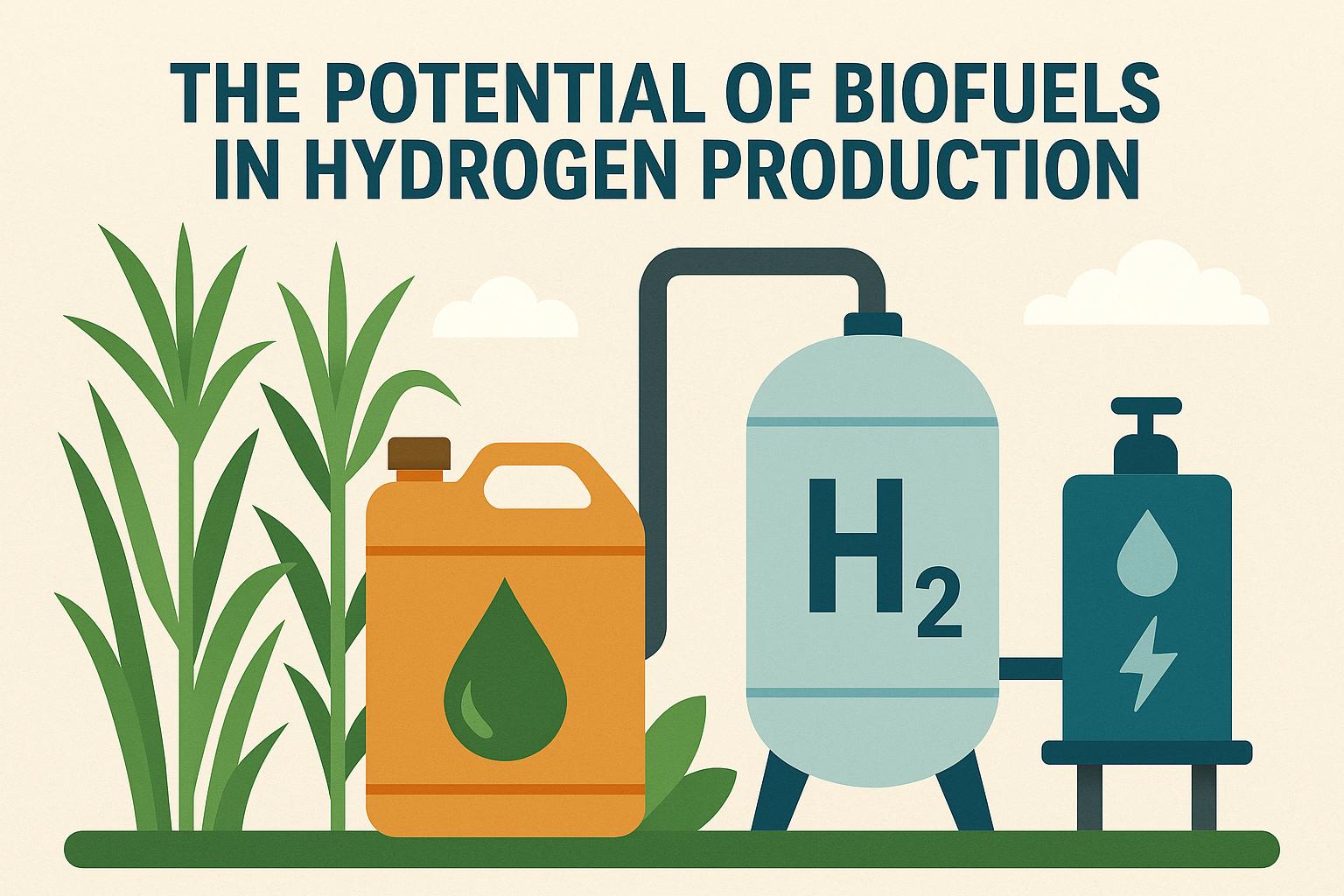
The Role of Biofuels in Hydrogen Production
Biofuels are increasingly recognized for their potential as renewable energy sources derived from organic materials, including plant biomass and animal waste. As the world grapples with the urgent need for sustainable and cleaner energy forms, biofuels offer a promising solution. Their significance continues to grow as hydrogen emerges as an energy carrier with the capability of supplementing traditional fossil fuels. The combined production of hydrogen using biofuels presents a noteworthy opportunity for enhancing the sustainability and viability of both these pivotal sectors.
Understanding Biofuels
Biofuels are primarily classified into three categories, each based on its origin and production methods. The first generation of biofuels originates from food crops such as corn and sugarcane. These involve traditional agricultural processes and are relatively simple to produce, although they often compete with food supply, raising ethical and environmental concerns. The second generation derives from non-food biomass materials, including agricultural residues and woody crops. These avoid the food versus fuel debate but require more complex conversion technologies. The third generation stems from algae, offering promising yields and the smallest land footprint, albeit still in the developmental stage with current technological limitations.
Hydrogen from Biomass Gasification
Biomass gasification is one of the central processes in the production of hydrogen from biofuels. It involves subjecting biomass to high temperatures in an oxygen-limited environment, converting it into syngas. This syngas primarily consists of hydrogen, carbon monoxide, and other hydrocarbons. The thermochemical process offers a viable pathway for hydrogen production due to its capacity to convert diverse biomass types. Modern advancements in gasification technologies are focused on enhancing efficiency and hydrogen yield while minimizing emissions, underscoring potential benefits over conventional methods. Such advancements involve improvements in reactor design and syngas cleaning processes, aimed at optimizing the hydrogen output for widespread application.
Ethanol and Methanol Reforming
Another approach to obtaining hydrogen from biofuels is through the reforming of alcohols such as ethanol and methanol. Both can be derived from biomass sources and are subjected to a chemical transformation process known as reforming. This involves reacting alcohols with steam at elevated temperatures and pressures to produce hydrogen-rich gas streams. The reforming of ethanol and methanol is attractive due to its relatively low emissions profile, offering a cleaner alternative to fossil fuel-derived hydrogen. Advances in catalyst development are key to the success of these processes, with current research aiming to improve performance, reduce costs, and increase lifespan to meet commercial needs effectively.
Environmental and Economic Implications
Biofuels, heralded for their renewable nature, contribute to hydrogen production with considerable environmental benefits. By their inherent carbon-neutral lifecycle—where the carbon dioxide absorbed during biomass growth offsets emissions during fuel conversion—biofuels have the potential to significantly reduce greenhouse gas emissions. However, the true environmental benefit is contingent on factors such as the biomass source, the sustainability of production practices, and the efficiency of conversion technologies.
From an economic perspective, producing hydrogen from biofuels introduces fresh market opportunities and creates employment, particularly in rural and agricultural communities. By utilizing local biomass resources, communities can stimulate economic development and reduce dependency on imported fossil fuels. Nonetheless, these economic advantages are closely tied to managing feedstock sustainably and ensuring the economic viability of conversion technologies. Challenges such as maintaining low production costs and securing consistent biomass supply must be addressed to realize these benefits fully.
Challenges and Future Perspectives
Despite the promising prospects, the integration of biofuels in hydrogen production is not without its challenges. The realization of cost-effective and efficient conversion technologies remains a significant hurdle. Research and development efforts are integral to achieving breakthroughs in technologies that would make biofuels a competitive alternative in the hydrogen economy. Moreover, establishing sustainable and reliable biomass supply chains is crucial. The development of supportive policies and frameworks that promote renewable energy adoption and facilitate the transition from laboratory to market is also essential for minimizing risks associated with market volatility and environmental impacts.
On the innovation front, scientists are continuously investigating methods to optimize the utilization of biofuels in hydrogen production. This includes exploring novel catalysts, improving gasifier designs, and experimenting with biofuel pre-treatment processes to enhance conversion efficiency. The goal is to establish a balance that maximizes energy output, minimizes environmental impact, and remains economically feasible.
In conclusion, the role of biofuels in hydrogen production represents an exciting frontier in energy solutions toward a sustainable future. The progress made in marrying these two sectors holds immense potential to shape an energy landscape that is not only sustainable but also resilient and innovative. Continuing research and technology advancements will be critical in improving the practicality and effectiveness of this energy pathway, facilitating its acceptance and integration on a broader scale. To keep abreast of developments in this domain, engagement with scientific literature and industry reports is highly recommended.