

Introduction to Biofuel Policies
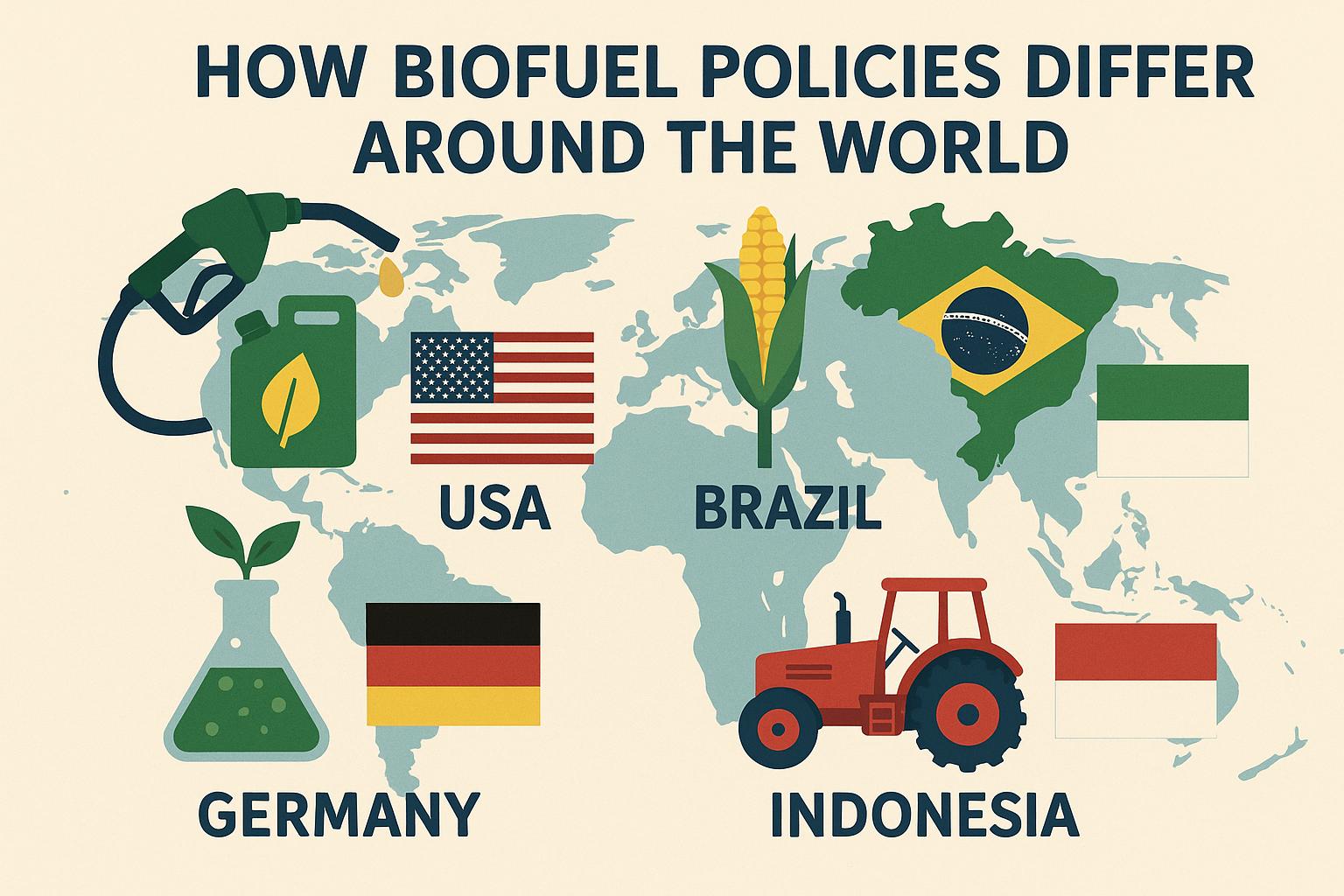
Biofuel policies vary significantly around the world due to differences in political priorities, economic capabilities, and environmental goals. Biofuels, derived from organic materials such as plants and waste, present an alternative to fossil fuels with potential benefits for energy security and greenhouse gas emissions mitigation. This article explores how different countries approach biofuel policies, focusing on key regions such as the United States, European Union, and Brazil.
The United States: Emphasizing Renewable Fuel Standards
In the United States, biofuel policy is largely shaped by the Renewable Fuel Standard (RFS), a federal program designed to address multiple aspects of energy policy. This mandates a certain volume of renewable fuel to replace or reduce the quantity of petroleum-based transportation fuel, heating oil, or jet fuel. The RFS is regarded as a cornerstone of U.S. energy policy, aiming not only to reduce greenhouse gas emissions but also to enhance energy independence and spur rural economic development.
Annual Targets and Biofuel Categories: The RFS program sets annual targets for renewable fuel usage, which are divided into various categories such as ethanol, biodiesel, and advanced biofuels. Compliance with these targets is monitored through Renewable Identification Numbers (RINs), which are utilized to track the production and blending of biofuels. This system helps ensure that the mandated volumes are met and provides a market mechanism for trading biofuel quotas within the industry.
Policy Impact and Challenges: Over the years, the RFS has played a significant role in the expansion of the U.S. biofuel industry. However, it has also faced challenges, including debates over the food versus fuel dilemma, where a higher allocation of crops for biofuels could impact food supply and prices. Additionally, fluctuations in oil prices can affect the economic viability of biofuels, as they often need to compete with traditional fossil fuels in terms of cost.
The European Union: Sustainability and Carbon Reduction
The European Union (EU) adopts a different approach compared to the U.S., emphasizing sustainability and carbon reduction in its biofuel policies. The Renewable Energy Directive (RED) serves as the primary legislative framework for promoting renewable energy use, including biofuels, across EU member states. RED II, the updated directive, mandates that member countries achieve specific renewable energy consumption targets in the transportation sector by the year 2030.
Sustainability Criteria: A significant feature of the EU’s biofuel policy is the inclusion of stringent sustainability criteria aimed at ensuring that biofuel production does not contribute to deforestation or other harmful environmental outcomes. These criteria are crucial in maintaining the environmental integrity of biofuels, as they prevent the potential negative impacts associated with land-use changes and biodiversity loss.
Prioritization of Advanced Biofuels: The EU has shown a strong preference for advanced biofuels derived from waste materials, given their lower environmental footprint compared to traditional biofuels made from food crops. This strategy not only mitigates the food versus fuel conflict but also supports a circular economy by utilizing waste products.
Brazil: Leading in Ethanol Production
Brazil is a global leader in biofuel production, particularly in the realm of sugarcane ethanol. The country has a rich history of government support for biofuels, most prominently through its National Alcohol Program (Proálcool). Initiated to reduce oil imports and bolster the domestic sugarcane industry, this program has formed the backbone of Brazil’s biofuel policy.
Ethanol Policy Framework: Brazil has established a robust framework for ethanol production and consumption, including mandates for ethanol blending in gasoline. This has been supported by substantial investments in infrastructure, from production plants to distribution networks, facilitating widespread ethanol use.
Expansion to Biodiesel: Over time, Brazil has broadened its biofuel agenda to include biodiesel, driven by national mandates that require the diesel fuel pool to include a specific percentage of biodiesel. This move not only diversifies Brazil’s renewable energy sources but also enhances rural development by promoting the cultivation of oilseed crops.
Research and Development Initiatives: The Brazilian government continues to champion research and development (R&D) efforts aimed at advancing biofuel technologies. These initiatives are supported by both economic and environmental objectives, seeking to enhance the efficiency of biofuel production processes and diminish associated carbon footprints.
Conclusion: Divergent Paths and Shared Goals
Despite the diverse approaches to biofuel policy around the globe, there exist common themes across nations such as reducing carbon emissions, increasing energy security, and fostering rural economic growth. Each region tailors its policy framework to its unique conditions, technological advancements, and economic contexts.
The global landscape of biofuel policies illustrates the complexities and opportunities associated with transitioning to renewable energy sources. As countries continue to refine and develop their biofuel strategies, ongoing dialogue and collaboration will be essential to confront shared challenges in energy and environmental sustainability effectively.
Moving forward, it will be critical to assess the broader impacts of biofuel policies, including their socio-economic, environmental, and technological implications. Such evaluations will enable nations to enhance the effectiveness of their policies, ensuring that biofuels contribute positively to a sustainable energy future. Countries must also strive to balance the delicate trade-offs between various policy goals to maximize the overall benefits of biofuels on a global scale.