

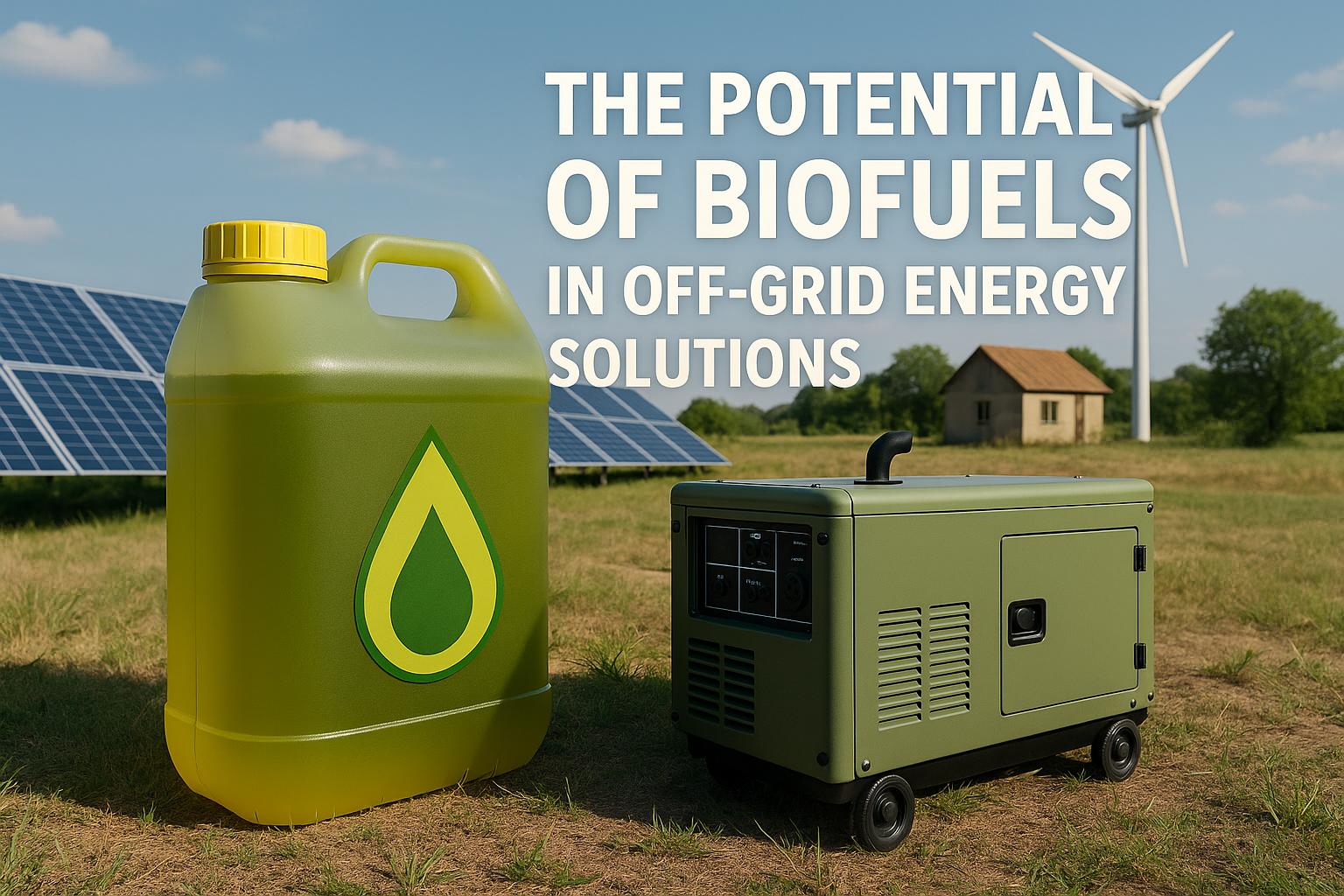
The Role of Biofuels in Off-Grid Energy Solutions
Biofuels are increasingly emerging as a potent alternative energy source, particularly in off-grid scenarios where conventional energy infrastructure may not be viable or economically sustainable. As global awareness of environmental sustainability rises, biofuels are gaining recognition for their potential in providing energy solutions, especially for communities lacking access to centralized power grids. This article delves into the various facets of biofuels, their benefits, challenges, and their promising role in the landscape of off-grid energy solutions.
Understanding Biofuels
Biofuels, by definition, are derived from organic materials such as plants and animal waste, distinguishing themselves as a renewable energy resource. They are categorized into several types, the most common being ethanol, biodiesel, and biogas. These fuels are produced via different processes; for instance, ethanol is often obtained through the fermentation of carbohydrates in crops such as corn or sugarcane, while biodiesel is typically created through a chemical process known as transesterification involving fats and oils.
The use of biofuels highlights a unique aspect of sustainability, given their origin from replenishable resources. Unlike fossil fuels, which deplete finite resources, biofuels can capitalize on the regenerative growth cycle of their organic sources. This renewability is foundational to biofuels’ role in achieving long-term energy sustainability.
Sustainability and Environmental Benefits
One of the primary appeals of biofuels is their sustainability. They offer several environmental benefits, paramount among them being a reduction in greenhouse gas emissions. Biofuels generally produce lower levels of carbon dioxide and other pollutants compared to traditional fossil fuels, due in part to their biological origin and the fact that the carbon dioxide released is roughly equivalent to the amount absorbed by the source plants during their growth.
Furthermore, biofuels are biodegradable, meaning they break down naturally without leaving harmful residues in the environment. This attribute not only curtails pollution but also minimizes the risk of environmental contamination in the event of spills or leaks. Biofuels contribute to a potential reduction in reliance on non-renewable energy sources, thereby enhancing energy security and fostering energy independence for nations and communities committed to sustainable development.
The cultivation of biofuel crops also plays a part in carbon sequestration—essentially capturing and storing atmospheric carbon dioxide—which is a vital process in mitigating climate change. This underscores the dual benefit of biofuels in not just providing energy but also in contributing positively to the global carbon budget.
Applications in Off-Grid Scenarios
In many off-grid locations, particularly rural or remote areas, energy supply is often a significant challenge. This is where biofuels can be especially valuable, offering dependable energy for electricity generation, transportation, and heating. Their feasibility is notably higher in regions with considerable agricultural activities, where crop residues and other biomass materials are abundantly available for conversion into energy.
Electricity Generation
In the realm of electricity generation, small-scale biofuel-based power plants provide a feasible solution for off-grid areas. These setups can harness biogas generators, which utilize organic waste to produce energy. This is practical for remote communities or farms where organic waste management is a concurrent need. Such systems often require a relatively low capital outlay compared to other renewable energy technologies and have manageable operational costs, making them an attractive option for energy provision in isolated areas.
Heating Solutions
Biofuels also play a critical role in heating applications—vital in off-grid regions where harsh climates necessitate effective heating solutions. Biodiesel, a type of biofuel, is particularly suitable for residential and industrial heating purposes. Its adaptability and efficiency provide a reliable source of heat, circumventing the conventional reliance on fossil fuels. This also aligns with the goal of establishing renewable energy sources for comprehensive energy use scenarios.
Challenges and Considerations
Despite the promising aspects of biofuels, there are several challenges facing their widespread adoption, especially in off-grid contexts. A primary concern is the competition for land use between food crops and biofuel feedstocks. This can lead to adverse socioeconomic and environmental effects if not managed appropriately. Utilizing non-food crops or leveraging waste materials for biofuel production can help mitigate this conflict.
In addition, the efficiency and economic viability of biofuel conversion processes need to be enhanced. Technological advancements are essential to boost these aspects, enabling biofuels to be more competitive with other energy sources. Barriers such as initial setup costs, infrastructure requirements, and awareness among stakeholders also need to be addressed through strategic planning and policy support.
The Future of Biofuels in Off-Grid Energy
The future of biofuels in off-grid energy solutions is promising, contingent upon further technological advancements and supportive policy frameworks. As decentralized energy solutions become more crucial, biofuels represent a significant component among other renewable energies. Their potential lies not just in their use as an energy source, but also in their ability to significantly improve energy accessibility for off-grid communities.
Ongoing research and development efforts are crucial in optimizing biofuel technologies. Investments directed towards innovating more efficient conversion processes, developing supportive infrastructure, and ensuring economic and ecological sustainability will bolster their role in global energy strategies. Regulatory frameworks and incentives will further propel biofuels’ adoption.
Meanwhile, organizations involved in renewable energy and sustainability continue to provide extensive resources for those interested in exploring biofuels further. These entities, through comprehensive reports and studies, offer insightful perspectives on making practical use of biofuels within the existing energy landscape. As such, biofuels are likely to form a substantial part of the renewable energy matrix, particularly in addressing the energy needs of off-grid locations globally.