

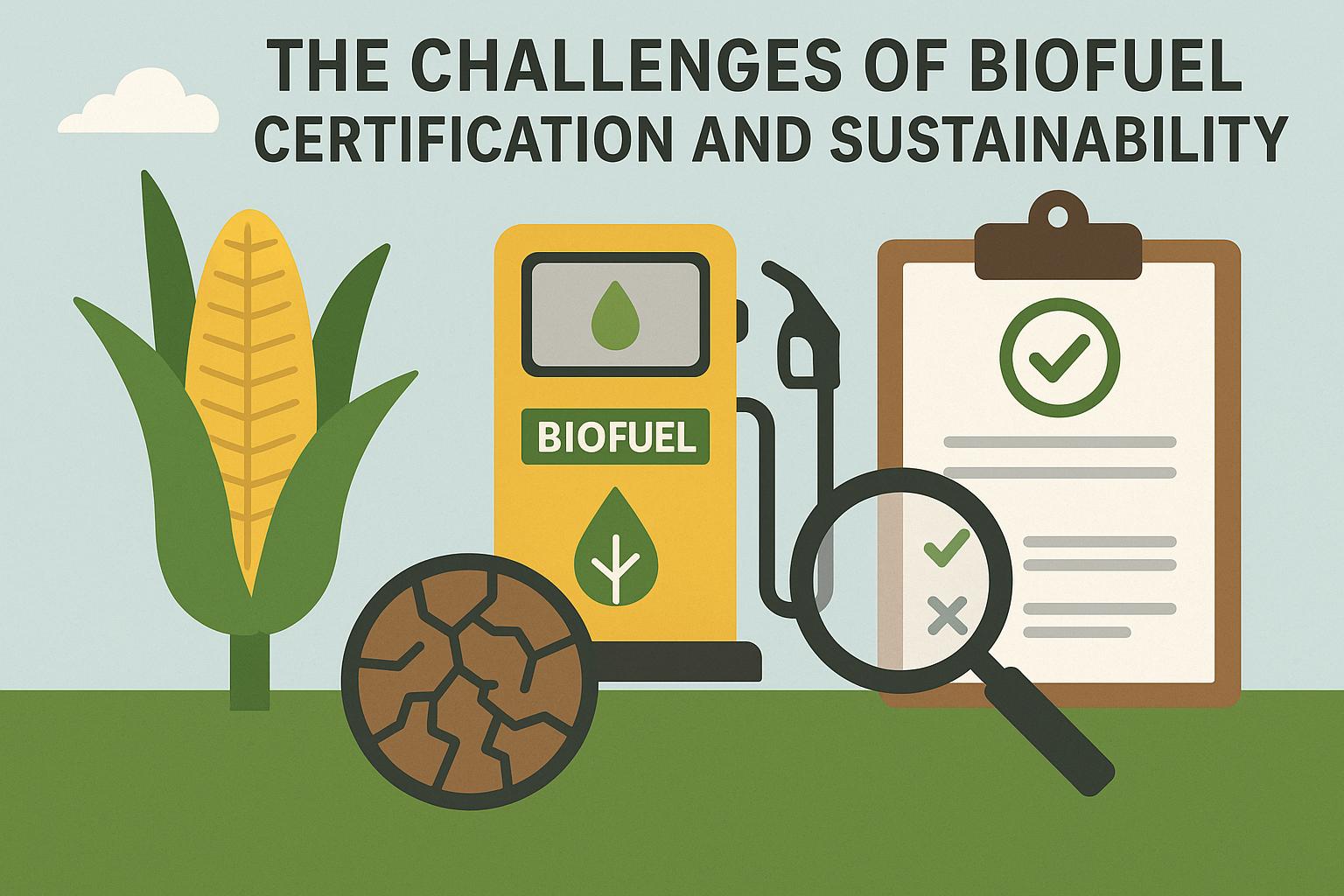
The Complexities of Biofuel Certification
Biofuel certification is a multifaceted process aimed at ensuring that biofuels meet specific environmental, social, and economic sustainability standards. As the demand for biofuels increases, so does the importance of establishing robust certification systems that verify the integrity of these products. However, several challenges make this process intricate and demand a structured approach to overcome the complexities involved.
Diverse Standards and Criteria
The landscape of biofuel certification is complicated by the existence of multiple certification systems worldwide, each with its own set of standards and criteria. These variations often arise from differing regulatory requirements, regional environmental priorities, and economic considerations tailored to specific local or national needs. For instance, ISCC (International Sustainability and Carbon Certification) and RSB (Roundtable on Sustainable Biomaterials) offer well-recognized certification systems but approach sustainability goals with different methodologies. These divergences can lead to inconsistencies and potential confusion among biofuel producers and consumers aiming to adhere to the best practices. A universal alignment or mutual recognition of standards could alleviate these issues, but this is yet a challenge to be fully addressed on the global scale.
Measuring Lifecycle Emissions
One of the pivotal challenges in biofuel certification is the accurate assessment of lifecycle greenhouse gas emissions. This assessment is critical as it encompasses emissions from various stages of biofuel production, namely cultivation, processing, and transportation. Each of these stages contributes uniquely to the total emissions, and disparities in data quality, calculation methodologies, and estimation models are common obstacles that lead to significant discrepancies. These discrepancies can affect the reliability and credibility of the certification process. To enhance accuracy, there is a need for standardized methodologies and improved data collection practices, ensuring that lifecycle assessments are reflective of true environmental impacts.
Monitoring Supply Chain Transparency
Transparency in the supply chain is indispensable for credible certification. This requires a diligent tracking mechanism of the origin of raw materials, production methods, and end-use applications of biofuels. The complexity of biofuel supply chains often entails navigating multiple countries and regulatory environments which can obscure necessary details. New technologies such as blockchain are being explored to potentially revolutionize transparency by providing a secure, traceable, and immutable record of transactions. Despite their promise, these technologies are still in the nascent stages of widespread implementation. Their future integration into supply chain management could prove pivotal in enhancing transparency, thus supporting more robust certification mechanisms.
Sustainability Challenges in Biofuel Production
The pursuit of sustainability is a central theme within the biofuel industry. Certification systems are tasked with ensuring that biofuel production processes do not inadvertently lead to environmental degradation or social inequities.
Land Use and Biodiversity
Biofuel production’s influence on land use and biodiversity is a significant concern. Conversion of natural habitats such as forests and grasslands into biofuel-crop plantations poses risks of habitat loss and decreased biodiversity. Moreover, such changes in land use can paradoxically increase carbon emissions in some scenarios, countering the carbon-reducing intent of biofuels. Certification systems are therefore necessitated to evaluate these land use changes rigorously, prioritizing the protection and conservation of ecologically sensitive areas. This requires robust environmental impact assessments and the implementation of best practices in land management.
Resource Efficiency
Achieving sustainability in biofuel production also heavily depends on resource efficiency, particularly concerning water and energy utilization. Many biofuel crops demand large water inputs, which can be problematic in regions already grappling with water shortages. Furthermore, the energy usage in the production and processing of biofuels must be optimized to achieve a favorable energy balance and lower overall emissions. Implementing innovative agricultural practices and leveraging technology to enhance resource efficiency is vital to mitigate these challenges.
Social and Economic Impacts
The social and economic dimensions of biofuel production are crucial for sustainability. The ripple effects of biofuel projects can influence local communities through modifications in land use, employment opportunities, and economic development. Certification systems must proactively address the potential risks of social displacement and inequity, advocating for projects that yield real benefits to local and indigenous populations. This can be ensured by integrating community-driven approaches and fair trade practices that safeguard and empower the impacted communities.
Moving Towards a Sustainable Future
Addressing these comprehensive challenges in biofuel certification and sustainability calls for concerted action involving governments, industry stakeholders, and non-profit organizations. Collaborative efforts are essential for reaching a consensus on global standards, improving data precision, enhancing transparency, and incorporating rigorous social and environmental safeguards. These actions are foundational to advancing the sustainability of biofuels.
Developing a robust international dialogue to align disparate certification standards and criteria is imperative for a coherent approach. Improving data accuracy for lifecycle emission assessments and integrating new technologies for supply chain transparency are actionable steps to increase the reliability of the certification systems. Furthermore, ensuring that biofuel production does not compromise ecological and social integrity will demand ongoing evaluation and adaptive management.
In conclusion, only through such comprehensive and coordinated efforts can biofuels truly fulfill their role in meeting global energy demands sustainably. As part of a larger shift towards cleaner energy, biofuels have the potential to significantly reduce reliance on fossil fuels, providing that the integrity and sustainability of their production processes are rigorously maintained and continually improved.