
The Role of Enzymes in Biofuel Production
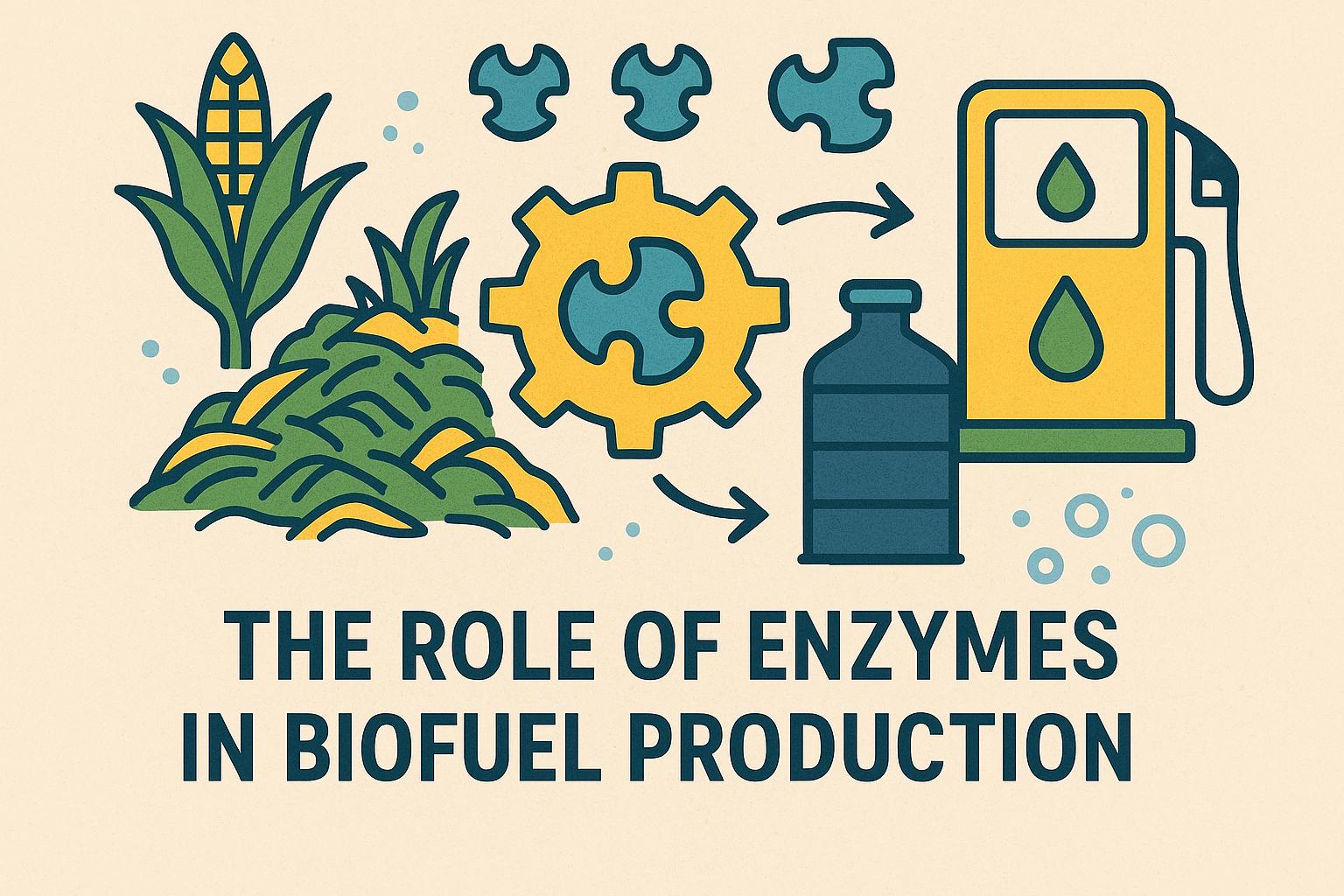
Biofuel production has gained considerable attention as a sustainable alternative to fossil fuels. A crucial element in the creation of biofuels is the use of enzymes, which play a significant role in breaking down biological materials into usable energy sources. This article explores the multifaceted role of enzymes in biofuel production, elaborates on the types of enzymes used, the processes involved, their advantages, as well as the challenges and future outlook of this innovative approach to energy production.
Understanding Enzymes
Enzymes are biological catalysts that significantly speed up chemical reactions, making them indispensable in numerous biological and industrial processes. These specialized proteins are highly specific, meaning that each type of enzyme only acts on particular substrates. This specificity is what endows them with the capability to efficiently and selectively enhance the rate of chemical reactions, which is a quality that proves vital in various industries, including biofuel production. In essence, enzymes lower the activation energy needed for reactions, facilitating the conversion of complex molecules into simpler ones that can be further transformed into energy.
Types of Enzymes Used in Biofuel Production
Several types of enzymes have been identified as central to biofuel production. Among the most important are the cellulases, which break down cellulose, a complex carbohydrate, into simple sugars that can be further processed. Cellulose is a major component of plant cell walls, and its efficient breakdown is pivotal in converting plant biomass into biofuels.
Hemicellulose is another component found in plant cell walls and requires hemicellulases for its degradation. Pectinases are used to decompose pectin, another structural polysaccharide in plant tissues. This set of enzymes allows for a comprehensive breakdown of plant materials, making the sugars available for subsequent biofuel production stages.
Additionally, amylases, which convert starches into sugars, play a critical role in biofuel production from starchy feedstocks. These enzymes break down starch, a storage form of glucose in plants, into simpler sugars such as maltose and glucose. Meanwhile, lipases are used in the production of biodiesel from fats and oils through a process known as transesterification. These enzymes highlight the diversity of enzyme applications across different biofuel types, including bioethanol and biodiesel, among others.
The Process of Enzymatic Biofuel Production
Enzymatic biofuel production is a structured process that progresses through several key stages. Initially, raw materials such as crop residues, wood chips, or vegetable oils undergo pretreatment to extract cellulose, hemicellulose, and other polysaccharides effectively. This preparatory phase is crucial for enhancing the efficiency of the enzymatic breakdown.
Once the raw materials are prepared, enzymes facilitate the conversion of complex carbohydrates and lipids into simple sugars like glucose and fatty acids. These simpler molecules are more amenable to fermentation, predominantly conducted by microorganisms. Fermentation is the process where these sugars are converted by microorganisms into alcohol-based biofuels such as ethanol. Occasionally, these microorganisms are genetically engineered to increase their productivity and efficiency, further enhancing the overall biofuel yield.
In scenarios involving the production of biodiesel, fatty acids derived from lipids undergo transesterification reactions, with the help of enzymes such as lipases, to produce fatty acid methyl esters (FAME), which constitute biodiesel. This systematic approach ensures the efficient transformation of various raw materials into biofuels.
Advantages of Using Enzymes
The use of enzymes in biofuel production offers several significant benefits. One of the primary advantages is their environmentally friendly nature. Enzymes operate under milder conditions of temperature and pH compared to conventional chemical catalysts, thereby conserving energy and minimizing the production of hazardous byproducts. This reduction in energy consumption is a pertinent advantage in the context of sustainable production practices.
Furthermore, enzymes display remarkable adaptability, as they can be engineered for specific tasks. This ability to tailor enzymes to particular substrates enhances the efficiency of the conversion processes, potentially lowering production costs. The flexibility and specificity of enzymes contribute significantly to the feasibility of biofuel production as a viable and sustainable alternative energy source. Consequently, enzyme-based technologies are not only advantageous for their environmental benefits but also for their potential to make biofuels more economically competitive.
Challenges and Future Outlook
Despite the numerous advantages, enzyme-based biofuel production is not without its challenges. One of the primary obstacles is the high cost associated with enzyme production. Manufacturers need to produce large quantities of enzymes at a cost that does not inflate the overall expense of biofuel production. Additionally, there is a constant need to optimize enzymatic activity to maximize efficiency and output.
Research is directed towards improving enzyme stability and activity even under harsh industrial conditions, reducing production costs, and scaling up enzyme production systems to meet industrial demands. Overcoming these challenges is essential for the broader acceptance and deployment of enzyme-based biofuel technologies.
Looking to the future, continued innovation in enzyme technology is imperative for biofuels to emerge as a predominant energy source. As the world seeks to improve energy security, reduce dependency on fossil fuels, and mitigate environmental impacts, advancements in enzyme-based biofuel production will play a critical role. Addressing the challenges associated with enzyme stability and cost-effectiveness can significantly enhance the contribution of enzymes to sustainable energy solutions, offering a promising outlook for the field of biofuels.
In conclusion, enzymes are key drivers in the biofuel production process. Their ability to efficiently convert complex substrates into usable energy forms, combined with their environmental and economic benefits, positions them as crucial agents in the transition toward more sustainable energy futures. As research and innovation continue to advance, enzymes are set to play an increasingly central role in the development and scaling of biofuel technologies.