

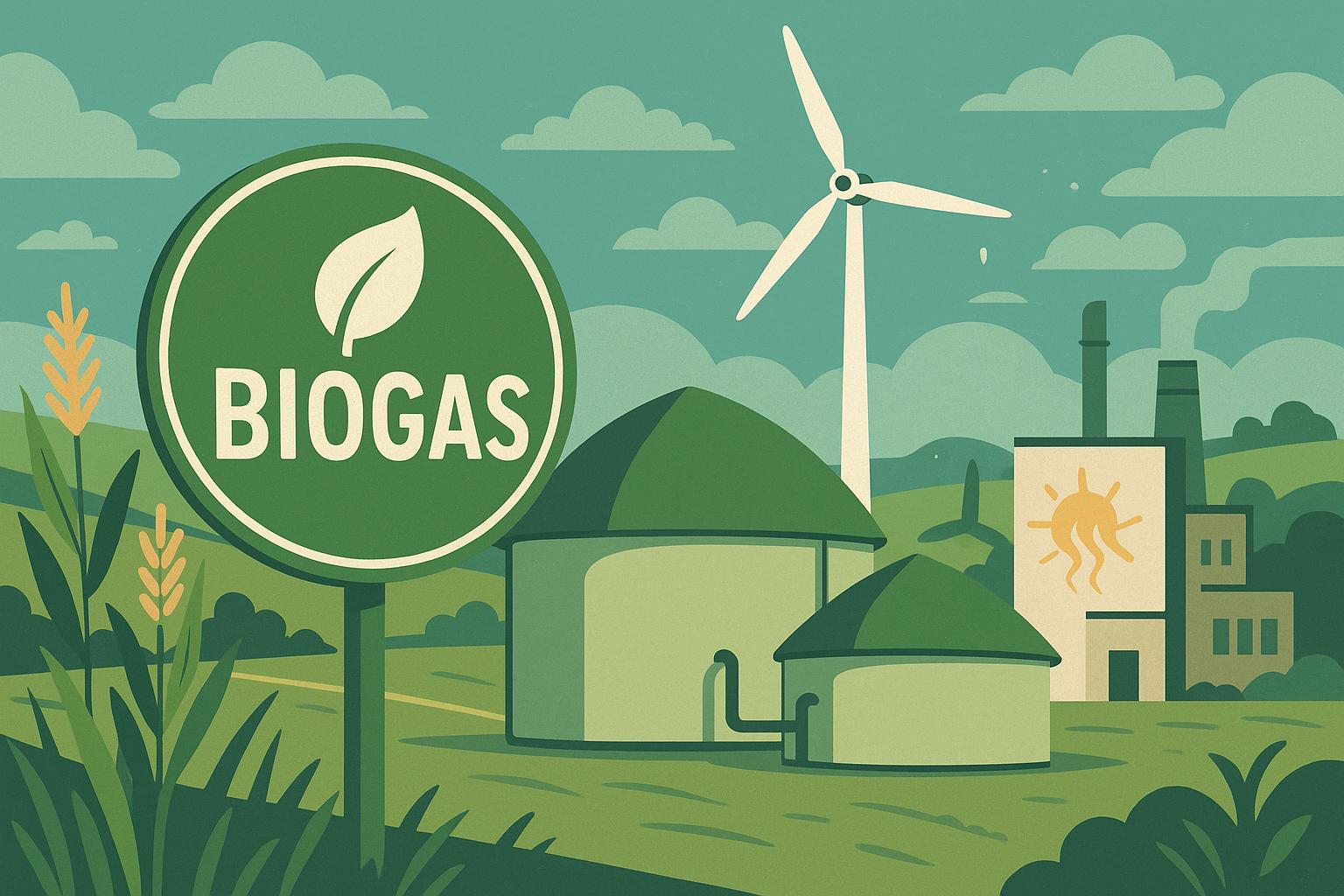
Understanding Biogas as a Renewable Energy Source
Biogas is progressively gaining attention as a sustainable and renewable energy source, providing a promising alternative to conventional fuels. This form of renewable energy is derived from the anaerobic digestion of organic materials. Common sources include agricultural waste, manure from livestock, municipal waste, various plant materials, sewage, green waste, and food waste. The core components of biogas are methane (CH4) and carbon dioxide (CO2), accompanied by trace amounts of other gases.
Production Process
Biogas can be naturally generated in environments like landfills. However, enhanced efficiency is achieved when biogas is captured in controlled settings such as anaerobic digesters. These digesters facilitate an oxygen-free environment where bacteria decompose organic material, leading to biogas formation. The process also yields residual matter known as digestate, which is valuable as a high-quality fertilizer, thus closing the loop in waste management.
Components of Biogas
Biogas primarily consists of:
Methane (CH4): Key energy component, making up 50-75% of the biogas composition. As a primary constituent, methane is a vital source of energy production, driving the utility of biogas in various applications.
Carbon Dioxide (CO2): Constitutes about 25-50% of biogas. While not used as an energy source, the presence of carbon dioxide in biogas is significant in assessing the quality and potential applications of the gas.
Trace Gases: Include small quantities of hydrogen sulfide (H2S), ammonia (NH3), and other minor gases. These are crucial to consider during purification processes, as they can impact the quality and safety of biogas utilizations.
Applications of Biogas
Biogas boasts versatility in its applications. It can be combusted to generate electricity, offering a viable source for thermal energy. Additionally, when purified, biogas can be upgraded to biomethane. This refined form is comparable to natural gas and is suitable for use as a vehicle fuel or for injection into existing gas distribution networks.
This alternative energy form can offer significant advantages for rural and urban areas alike, by serving as a decentralized energy source. Its capacity to reduce dependency on fossil fuels and diminish greenhouse gas emissions makes biogas a desirable addition to sustainable energy practices.
Environmental Benefits
Biogas utilization presents remarkable environmental benefits. Key to these advantages is its role in curbing greenhouse gas emissions; methane, a potent greenhouse gas, is captured rather than released into the atmosphere. Furthermore, the production and usage of biogas entail efficient waste management, reducing landfill dependency and repurposing waste into a resourceful output.
The digestate byproduct from biogas production provides a nutrient-rich solution for soil enrichment, substituting synthetic fertilizers and promoting soil health. This integration into the circular economy illustrates biogas’s potential in recycling waste into a beneficial resource, emphasizing its place in renewable energy conversations.
Challenges and Opportunities
Several challenges face the biogas industry. The initial setup of biogas facilities demands considerable investment, and the operation requires a skilled workforce to manage its complexities. Additionally, for the sector to flourish, supportive regulatory frameworks and incentives from governmental entities are significant.
Nonetheless, considerable opportunities exist, notably in areas abundant with agricultural activity or food processing enterprises, where organic waste is plentifully available. Technological advancements and a growing awareness of renewable energy potentials amplify the future relevance of biogas in global energy strategies.
Conclusion
Biogas stands as a viable alternative to non-renewable fossil fuels, providing various environmental, economic, and societal advantages. With continued technological progression and the encouragement of supportive policies, the potential for biogas as a significant renewable energy source is increasing.
For individuals seeking further insight into practical implementations and case studies associated with biogas, examining resources from renewable energy development organizations will be beneficial. Engaging in such explorations can provide wider perspectives of biogas’s integration into future energy solutions.