

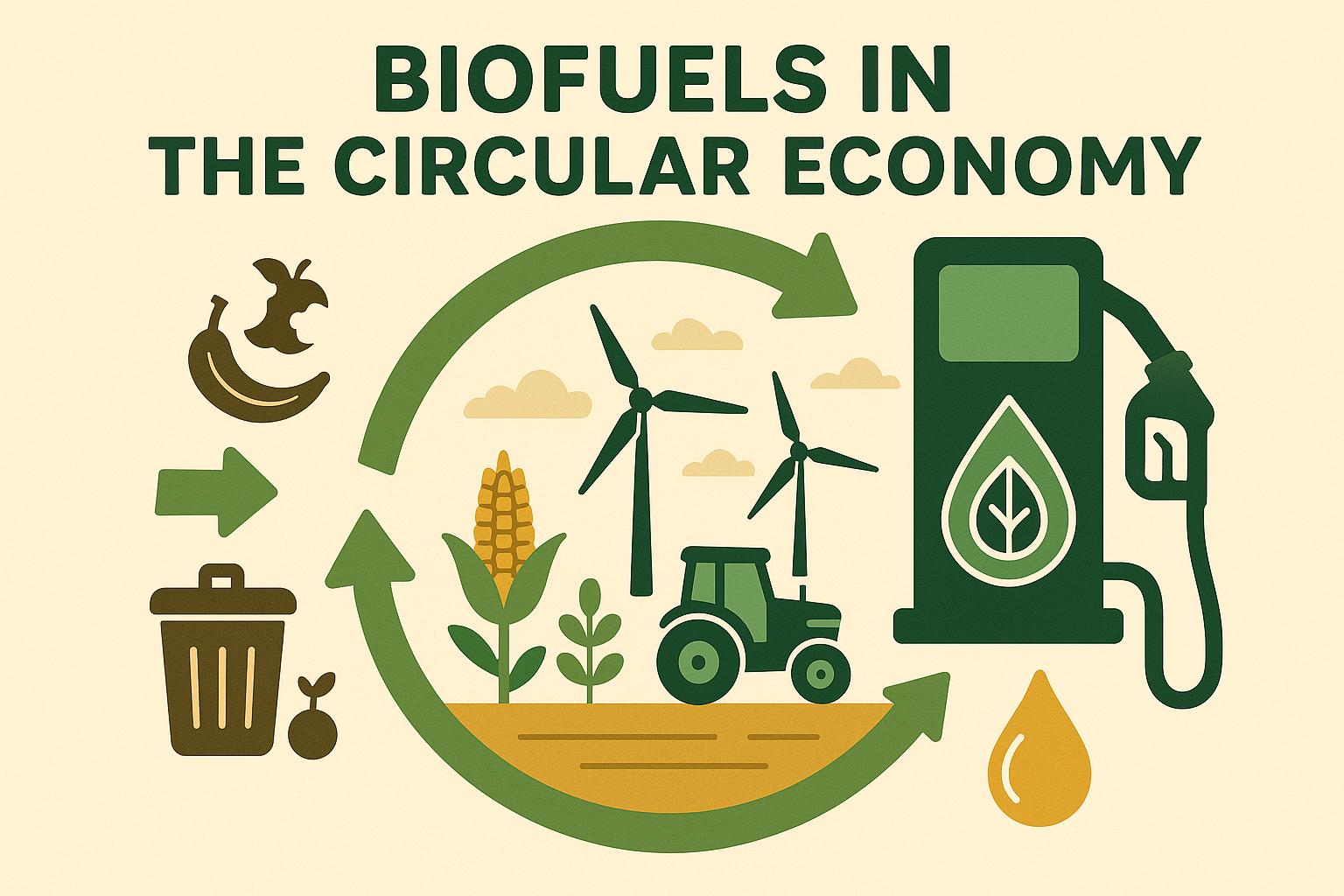
The Role of Biofuels in the Circular Economy
In the contemporary landscape of sustainable development and energy innovation, biofuels have emerged as a central theme in conversations surrounding renewable energy solutions. These fuels, which are produced from living or recently living organic materials, promise a shift away from the long-standing reliance on conventional fossil fuels. In a circular economy framework, biofuels are instrumental in lessening the dependency on finite natural resources and mitigating adverse environmental impacts.
Understanding Biofuels
Biofuels encompass a range of fuels derived from biological materials, predominantly plant-based substances, animal derivatives, and agricultural by-products. The most widely recognized variants of biofuels are bioethanol and biodiesel. Bioethanol is generated through the fermentation of sugars, commonly sourced from crops such as corn and sugarcane. It serves as a renewable energy source that can be blended with gasoline to power vehicles. Biodiesel, on the other hand, is fashioned through a chemical process known as transesterification, which converts oils or animal fats into usable fuel. This type of biofuel can be used in diesel engines with minimal modifications, making it a versatile component of sustainable energy strategies.
Contribution to Resource Efficiency
Within the context of a circular economy, the efficient use of resources is a cornerstone principle. Biofuels contribute significantly by utilizing waste products and by-products from industries like agriculture and forestry. This transformation not only charts a sustainable path for energy but also diminishes the demand for landfill space and curtails greenhouse gas emissions. By turning biomass waste into energy, biofuels align with the overarching principles of reducing, reusing, and recycling. The ability to convert waste into a resource is a defining characteristic of circular economic models.
Lowering Carbon Emissions
One of the key advantages of biofuels is their potential to lower carbon emissions. Unlike fossil fuels, which add ancient carbon to the atmosphere, the carbon dioxide emitted by burning biofuels is generally reabsorbed by the plants cultivated for fuel production, forming a more balanced carbon cycle. While this cycle is not perfectly neutral due to emissions in cultivation, production, and transportation, biofuels nonetheless present a markedly reduced carbon footprint compared to traditional fossil fuels. As part of a circular economy, biofuels can be instrumental in achieving global climate goals and advancing decarbonization initiatives.
Decentralized Energy Production
An often overlooked yet significant benefit of biofuels lies in their potential to foster decentralized energy production. This approach involves producing energy closer to the point of consumption, thereby reducing energy losses occurring during transportation. It encourages local economies and reduces the reliance on imports of fossil fuels. Communities can benefit greatly from increased energy self-sufficiency, resulting in enhanced economic resilience and stability. Such decentralization is in sync with circular economy ideals by fostering localized and sustainable energy networks.
Challenges and Considerations
Despite the myriad advantages that biofuels present, their widespread adoption is not without challenges. The production of biofuels necessitates careful management to prevent competition with food resources and avert undesirable consequences such as deforestation. Furthermore, the energy returns from biofuels, along with their sustainability profiles, can vary considerably based on the type of feedstock used and the methods of production employed. It’s crucial to navigate these challenges to harness biofuels’ full potential without detrimental social or ecological outcomes.
Technological Innovations
Technological advancements are an essential driver in enhancing the sustainability and efficiency of biofuel production. Innovations in genetic engineering, for example, aim to increase crop yields and optimize the energy content of biomass. Enzymatic processes are being refined to improve the efficiency of converting biomass into fuel. Moreover, the development of second-generation biofuels, which rely on non-food biomass sources such as agricultural waste, holds promise in addressing food supply concerns. Continued innovation in these areas is imperative to transition toward a sustainable energy paradigm within the framework of a circular economy.
Policy and Regulations
The role of government policies cannot be overstated in shaping the biofuel landscape. Incentives, subsidies, and regulatory mandates catalyze the adoption and advancement of biofuel technologies. These measures ensure that the growth of biofuels adheres to sustainability criteria, safeguarding against the infringement on biodiversity and food security. Effective policy frameworks establish accountability and promote best practices in biofuel production, facilitating their alignment with broader environmental and social objectives.
Conclusion
Incorporating biofuels into a circular economy model has the potential to signal a transformative shift in current energy systems. By systematically harnessing renewable biological resources, biofuels offer a route toward a more sustainable and efficient energy utilization spectrum. However, realizing this potential hinges on careful oversight and constant innovation. The balancing act involves maximizing the environmental and societal benefits of biofuels while minimizing any adverse impacts. To stay informed and delve deeper into the ongoing innovations and research in the biofuel sector, engaging with reputable energy-centric organizations and scientific publications can provide valuable insights into this evolving field.