

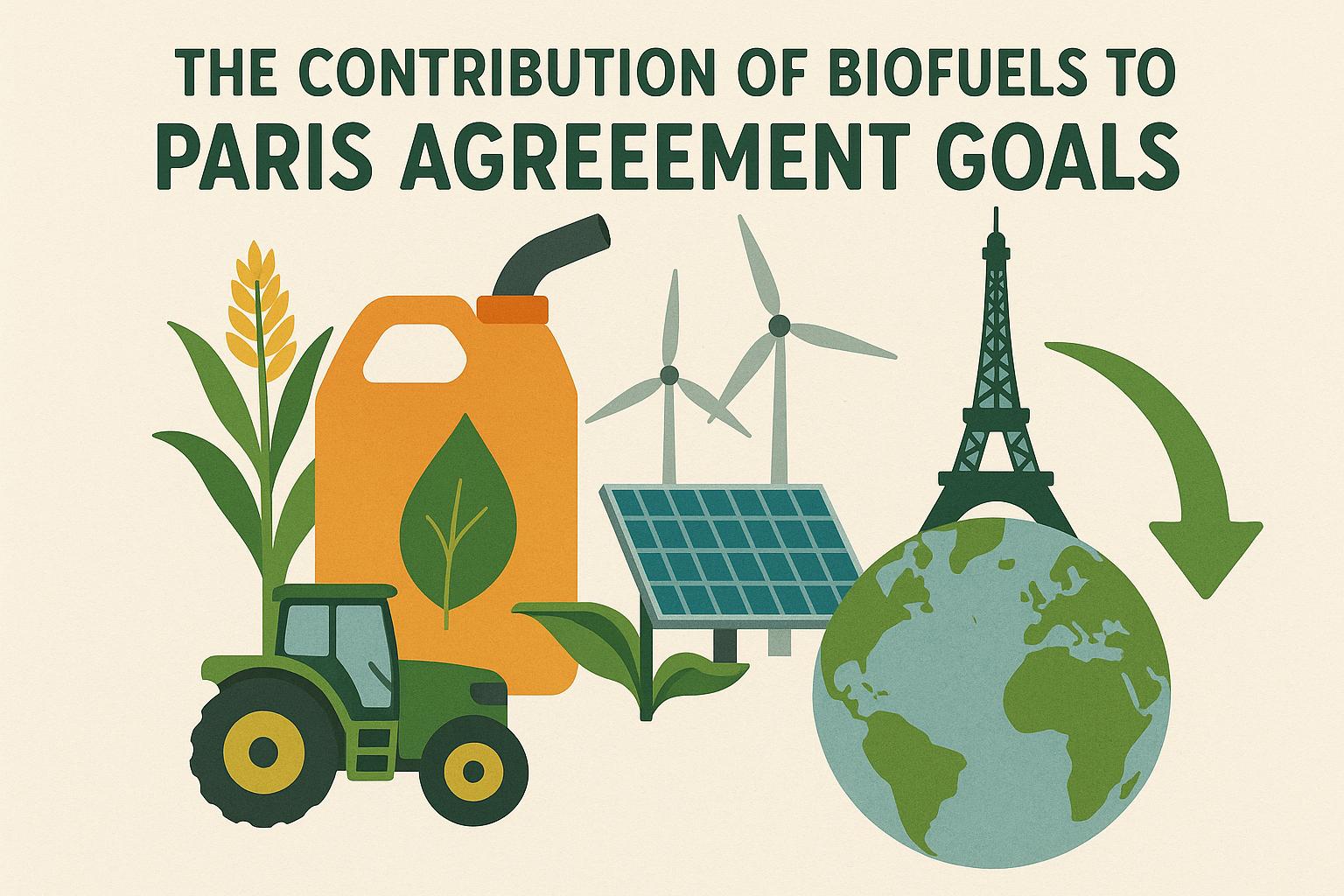
The Role of Biofuels in Achieving Paris Agreement Objectives
The Paris Agreement, adopted in 2015, is a landmark international accord that aims to limit global warming to well below 2 degrees Celsius above pre-industrial levels, with efforts to limit it to 1.5 degrees. Biofuels have emerged as a potentially significant contributor to the renewable energy solutions needed to achieve these goals.
Understanding Biofuels
Biofuels are renewable energy sources produced from organic materials or biomass. The most common types are ethanol and biodiesel, which are typically made from crops such as corn, sugarcane, and soybean. Unlike fossil fuels, biofuels are derived from living matter, which theoretically makes them a cleaner alternative that can help reduce greenhouse gas emissions.
Biofuels and Reduced Carbon Footprint
Using biofuels can lead to a reduction in carbon emissions compared to traditional fossil fuels. When biofuels are burned, they release the carbon dioxide the plants absorbed while growing, which can potentially result in a more balanced carbon cycle. This cyclical process suggests that biofuels can contribute to lower overall emissions, an essential factor in meeting the Paris Agreement targets.
Compatibility with Existing Infrastructure
Biofuels offer the advantage of being compatible with existing fuel infrastructure. Ethanol, for instance, can be blended with gasoline to produce mixtures such as E10 or E85, which can be used without significant modifications to engines. This compatibility makes it easier for countries to integrate biofuels into their energy mix while transitioning away from fossil fuels.
Challenges and Limitations
Despite their potential benefits, biofuels are not without challenges. One major concern is the land-use change associated with biofuel production. Growing crops for biofuels often requires significant land and resources, which can lead to deforestation and habitat loss, potentially offsetting the environmental benefits.
Another challenge is the competition with food resources. Utilizing large quantities of crops for biofuel production can lead to higher food prices and food scarcity. Sustainable biofuel production must take these issues into account to ensure it does not impede food security.
Economic Implications of Biofuel Production
The economic impact of biofuel production is a topic of considerable complexity. On one hand, biofuel industries can stimulate local economies by creating jobs in agriculture, research, and fuel production sectors. On the other hand, fluctuating agricultural prices can make biofuel production economically volatile. Moreover, investments in biofuel technology require substantial funding, which may pose a challenge for developing regions.
Environmental Concerns and Impact
Biofuel production has sparked discussions around its long-term environmental viability. While biofuels are considered less harmful than fossil fuels, their production process can lead to unintended environmental consequences. Fertilizers and pesticides used in growing biofuel crops can contribute to water pollution. Additionally, the energy used in biofuel production processes, such as refining and transportation, must also be considered when assessing environmental impact.
Sustainable Practices and Innovations
To address these challenges, ongoing research is focused on developing second-generation biofuels. These are made from non-food biomass such as agricultural residues, waste, and dedicated energy crops that do not compete with food production. Innovations in biotechnology and agriculture can further enhance the efficiency and sustainability of biofuel production.
Integrating Biofuels with Other Renewable Energies
To maximize the effectiveness of biofuels, they can be strategically integrated with other renewable energy sources, such as solar and wind. This integrated approach enhances energy diversification and resilience, reducing reliance on a single energy source. It also allows for the optimization of energy systems, contributing to a more stable and sustainable energy supply chain.
Role of Policy and Regulation
The success of biofuels in contributing to climate goals heavily relies on supportive policies and regulations. Governments can play a pivotal role by implementing policies that encourage biofuel research, development, and deployment. Incentives such as tax credits, subsidies, and mandates for biofuel usage can stimulate industry growth while ensuring compliance with environmental standards.
Conclusion
Biofuels hold the potential to reduce greenhouse gas emissions, complement existing energy infrastructure, and support the objectives of the Paris Agreement. However, to maximize their contribution, it is crucial to address the associated environmental and socio-economic challenges. Encouraging sustainable practices and investing in research and technology can help overcome these hurdles, making biofuels a valuable part of the global strategy to combat climate change. For more information on sustainable energy initiatives and the Paris Agreement, readers can refer to the Paris Agreement’s Official Documentation on sustainable energy development.